Commercial Roofing Contractors in Chicagoland for Repairs, Maintenance & Replacement
Assess the Roof Before You Commit to the Scope
Liberty Restoration Group helps Chicagoland commercial property owners, managers, and facilities teams evaluate roofing and exterior conditions before committing to a repair, restoration, or replacement project. As commercial roofing contractors serving the greater Chicago area, we start by understanding the actual condition of the roof rather than assuming the most expensive fix is the only option.
Planning for 2027? A commercial roof assessment can help property managers, building owners, HOA/condo decision-makers, and facilities teams document current roof conditions, identify priorities, and plan future repair, maintenance, restoration, or replacement needs.
A commercial roof has to protect the building while supporting the operations taking place underneath it. Liberty approaches each assessment with the goal of identifying what needs attention, how urgently it needs attention, and what construction scope makes sense for the property.


Commercial Capabilities at a Glance
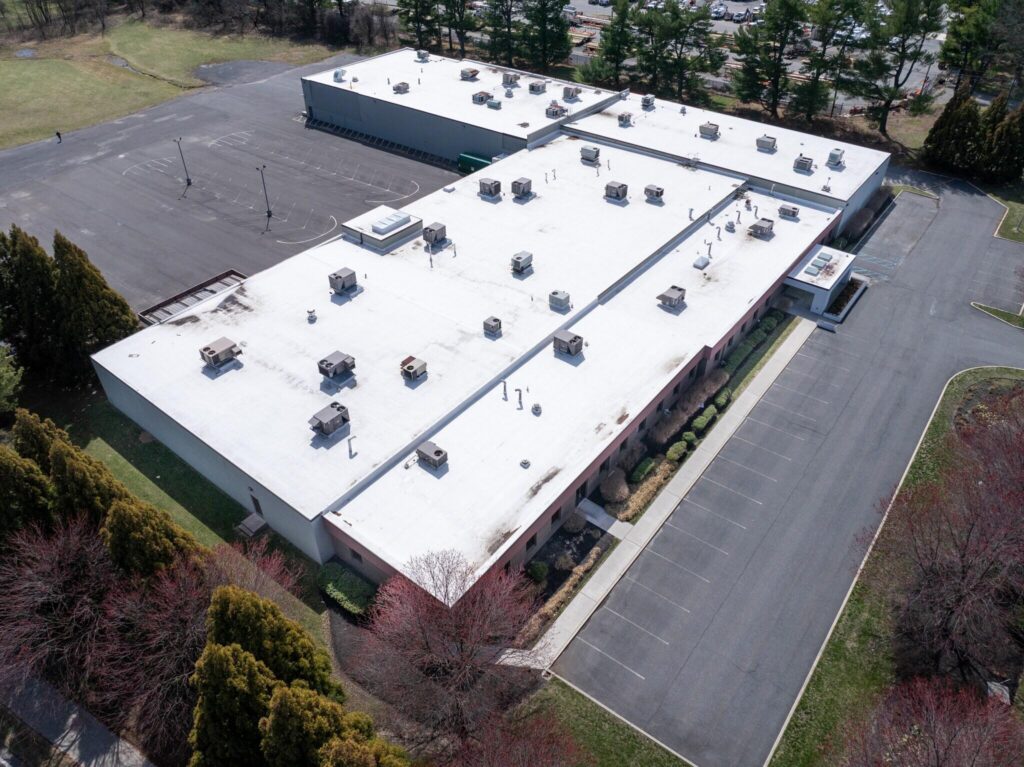
Liberty works across multiple commercial roofing systems and project types, from targeted repairs and preventative maintenance to larger restoration and replacement scopes.
- Commercial roofing services: repairs, service calls, ongoing maintenance, annual inspections, restoration, and full replacements
- Warranty work: warranty-related repairs on Liberty-installed roofs and on other roofs when the manufacturer authorizes the work
- Project scope: commercial projects are evaluated based on scope, building requirements, schedule, and project needs
What Your Commercial Roof Assessment Includes
The purpose of the assessment is to give ownership and property management a clearer understanding of the roof’s condition before a construction decision is made.
- Executive summary and priority level
- Roof and exterior overview
- Photo documentation
- Priority classification
- Repair, restoration, or replacement considerations
- Recommended next scope, testing, or proposal
- Scope disclaimer
The Diagnosis Comes Before the Decision
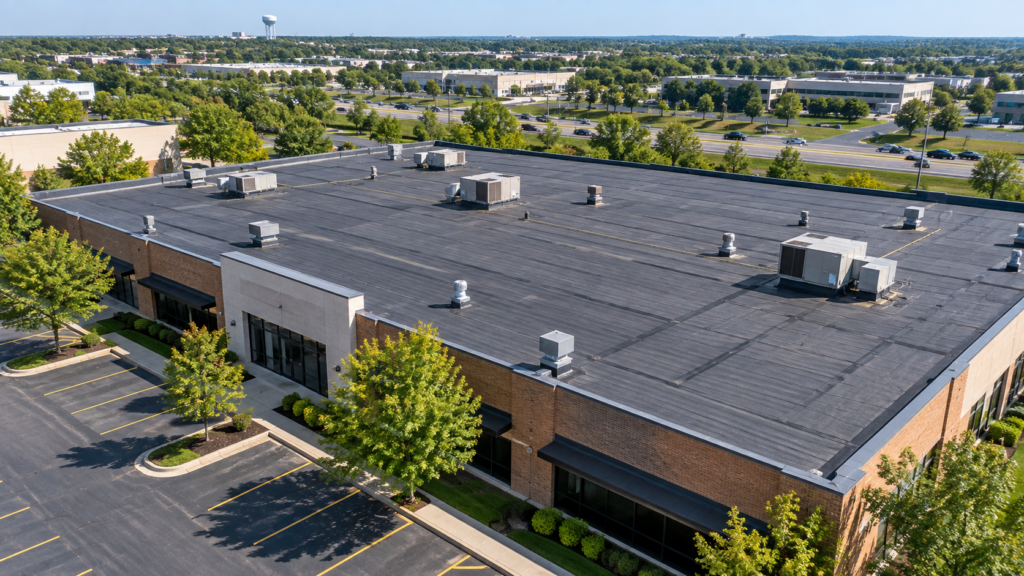
A commercial roof problem deserves a diagnosis before ownership commits to the most expensive solution available. The assessment documents what was observed and how urgent it is, so the call between a targeted repair and a larger project comes based on documented roof conditions rather than assumptions.
Commercial Roofing Planned Around an Operating Property
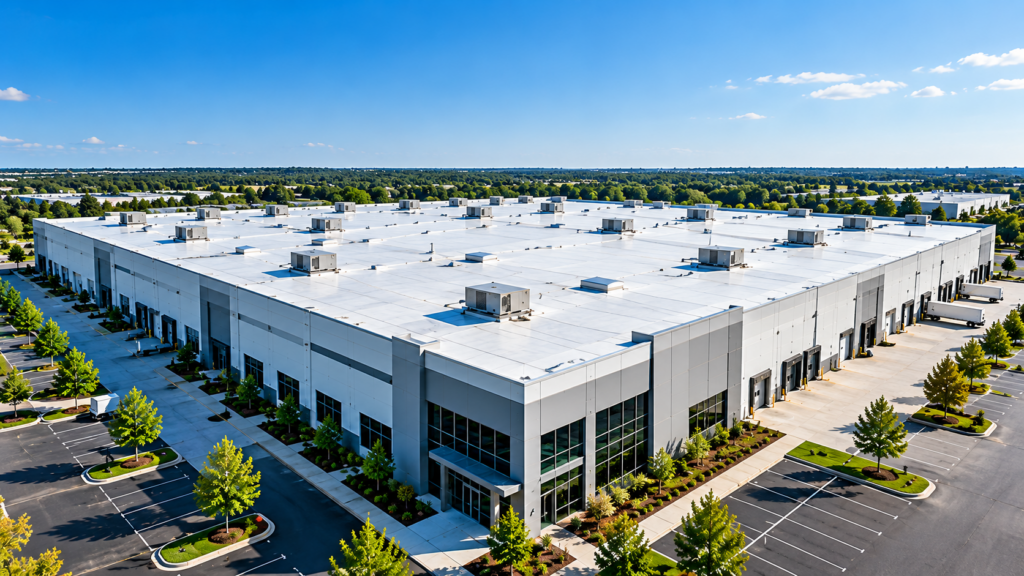
Commercial roofing work happens over a property that keeps operating through the project. Planning therefore has to account for more than the roof itself, including how crews, equipment, materials, tenants, employees, and visitors will interact with the work area.
Liberty’s commercial roofing planning can account for:
- Staging and equipment placement
- Scheduling around tenant and employee access
- Parking and site safety
- Material delivery logistics
- Coordination with property management or facilities staff
Commercial Roof Repair or Replacement? What We're Actually Weighing
The right commercial roofing scope depends on the condition, extent, and pattern of the problem. A localized failure can call for a very different response than widespread deterioration across multiple roof sections.
Repair may be appropriate when:
Targeted commercial roof repair can make sense when the underlying system remains serviceable and the problem is limited enough to address without a broader construction scope.
- Damage is localized to one leak or one failing membrane section: A contained problem may be addressed without disturbing otherwise serviceable portions of the roofing system.
- The rest of the roof is sound and the remaining service life supports targeted work: When the broader roof remains in reasonable condition, repair may be the more appropriate way to address the immediate issue.
A larger project is worth discussing when:
Replacement or restoration becomes more relevant when deterioration is no longer limited to one area or when repairs are becoming a recurring requirement.
- Deterioration is widespread across multiple sections: Conditions affecting multiple areas can indicate that a larger roofing scope should be evaluated rather than continuing with isolated repairs.
- Storm damage affects more than one localized area: Widespread wind, hail, or other storm-related damage may require a broader assessment of the roofing system and exterior.
- Recurring repairs are becoming a pattern rather than an exception: A history of repeated service calls can be an indication that ownership should compare continued repairs with restoration or replacement.

How Liberty Evaluates Commercial Roofing Systems
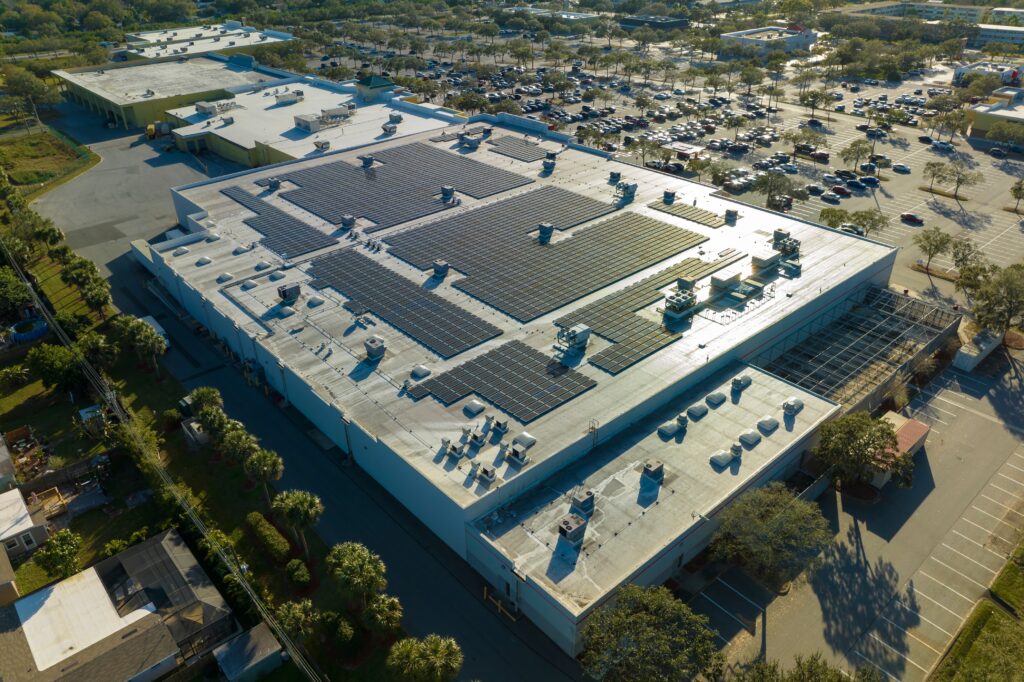
Different commercial buildings call for different roofing approaches, from single-ply membrane systems to multi-layer built-up assemblies to coating-based restoration.
Liberty evaluates the existing roofing system and the property’s specific conditions before recommending whether repair, restoration, a coating approach, or replacement makes sense for that system. Specialty and steep-slope work, including cedar and wood-shake systems, is also part of Liberty’s roofing experience across the greater Chicagoland area.
Commercial Roof Repairs and Ongoing Maintenance
Commercial roofing problems do not always arrive on a convenient schedule. A leak during business hours, storm damage after severe weather, or a developing membrane problem can require prompt attention while the longer-term scope gets determined.
Liberty provides:
- Commercial roof repairs and service calls: Targeted work addressing leaks, localized failures, and other identified roofing concerns.
- Ongoing commercial roof maintenance: Maintenance intended to help property teams identify developing issues before they become larger roofing problems.
- Annual preventative roof inspections: Recurring inspections provide an opportunity to document roof conditions and identify areas that may require attention.
Manufacturer Warranty Work
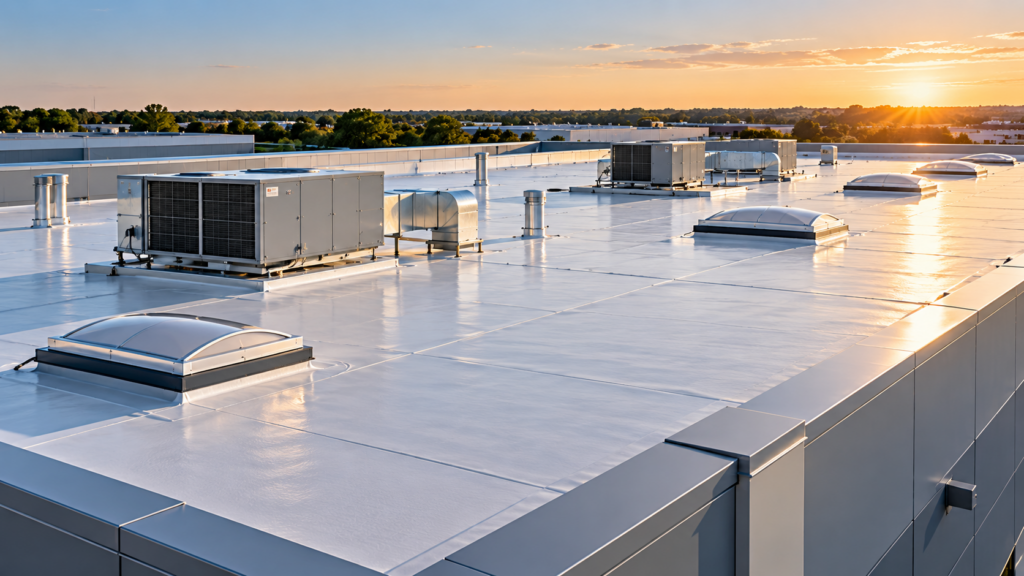
Existing manufacturer warranties can affect who is authorized to perform roofing repairs and how labor is handled. Liberty’s warranty-related work follows the requirements of the applicable manufacturer and existing warranty.
Liberty can perform warranty-related repairs when:
- Liberty installed the roofing system originally
- The manufacturer authorizes the work
Commercial Project Size and Bonding
Commercial roofing projects can vary substantially in size, building type, and construction requirements. Commercial projects are evaluated based on scope, building requirements, schedule, and project needs, and Liberty can access performance bonding when a project requires it.
- Project scope evaluated on its own terms: Rather than a published minimum or maximum size, project scope is assessed according to the property’s specific requirements, building type, schedule, and needs.
- Performance bonding available when required: When project specifications call for performance bonding, Liberty can access bonding for qualifying project requirements.
Beyond the Roof
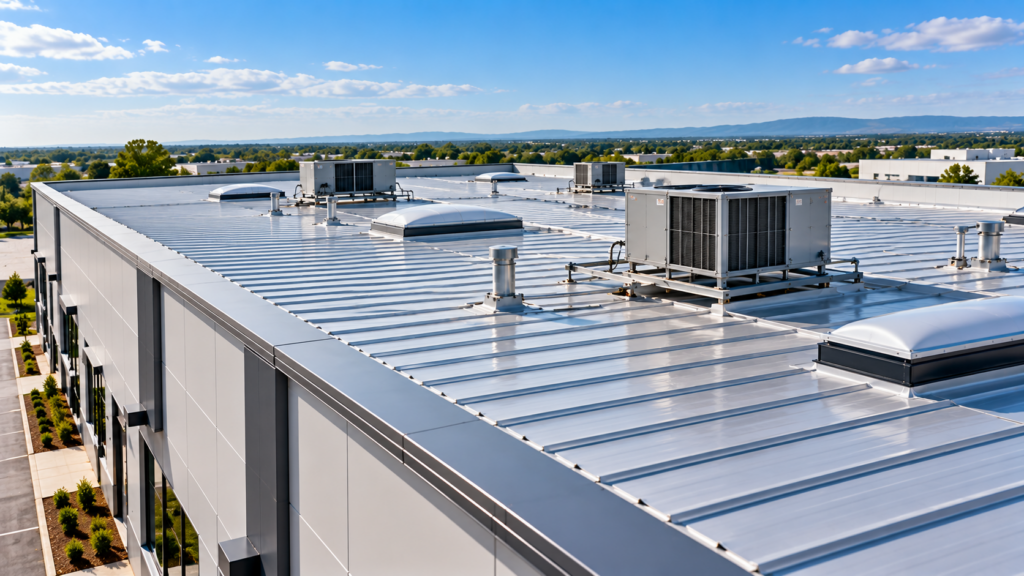
Commercial exterior conditions do not always stop at the roofline. Gutters, siding, and specialty steep-slope roofing can become relevant when they affect or form part of the property’s broader exterior scope.
- Gutters and siding: Considered within the same property context when relevant to the roofing scope and overall exterior condition.
- Specialty steep-slope roofing: Cedar and premium composite systems can be considered for office, hospitality, clubhouse, mixed-use, and multifamily-managed properties with architectural rooflines.
A Clear Path from Problem to Project
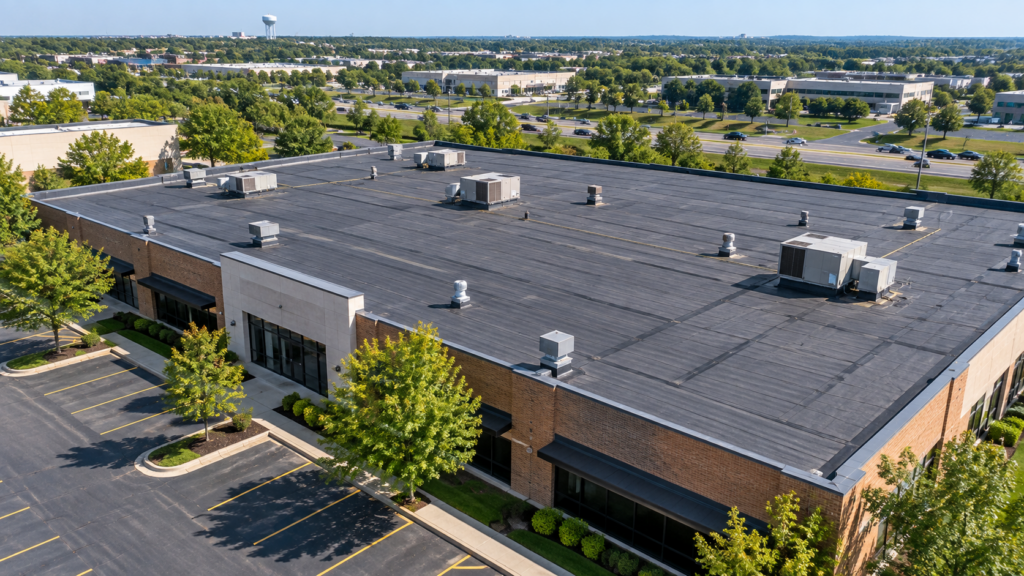
A commercial roofing project is easier to plan when the process begins with the actual condition of the property. Liberty’s approach moves from identifying the concern through assessment, documentation, scope development, and project planning.
- Tell us what the concern is.
- We evaluate the relevant roofing and exterior conditions.
- We document findings and priorities.
- We define the appropriate construction scope.
- We plan and execute around the property’s operational needs.
Where Liberty Stands Today
Liberty Restoration Group is GAF Certified and holds Illinois roofing license 104.017649. Cook County lists the company as a registered roofing contractor, and BBB currently shows Liberty as Accredited with an A+ rating.
Our roofing work spans residential and commercial properties, including significant cedar and wood-shake work across the greater Chicagoland area, alongside roofing, gutter, and siding capabilities.
Talk to a Cedar Roofing Contractor Who Understands Lakefront Properties
Whether your home sits directly on the water or back among the trees near Lake Zurich, your roof deserves a plan built around its actual exposure, not a generic recommendation copied from an inland project.
Our team will walk your property, assess how proximity to the water, tree cover, and wind direction are affecting your cedar roof, and give you a clear, written plan for repair, maintenance, or installation. We’ll also explain the reasoning behind that plan, so you understand exactly what you’re paying for and why.
Schedule a FREE Consultation
To make an appointment with Liberty Restoration Group, please fill out the form below, or contact us at our office.
Frequently Asked Questions
Can Liberty perform work on a roof with an existing manufacturer warranty?
If Liberty installed the roof originally, yes. If another contractor installed it, Liberty can still perform warranty repairs when the manufacturer authorizes the work and agrees to cover the labor under the existing warranty.
Is there a project size Liberty won't take on?
Commercial projects are evaluated based on scope, building requirements, schedule, and project needs.
How is a commercial assessment different from a standard roofing estimate?
A standard estimate is often built on an assumed scope before anyone has looked closely at the roof. An assessment documents the actual condition first, including photos and priority findings, so ownership has real information before committing to a repair, restoration, or replacement scope.
Can Liberty work around an occupied building or active tenants?
Yes. Planning accounts for access, staging, scheduling, and site safety around a property that keeps operating while the work happens.
What information should I have ready before scheduling an assessment?
A short description of the concern, the property address, and any recent history of leaks, repairs, or storm events is enough to get started.